
Q2 2026 was not a quiet quarter for trading.
Across derivatives, options, foreign exchange, electronic institutional markets, and retail brokerage platforms, the latest available data points to a trading environment that remained active and increasingly multi-asset. For brokers, the key takeaway is not simply that volumes were strong. It is that trader behaviour is becoming broader, more mobile, more product-diverse, and more infrastructure-driven.
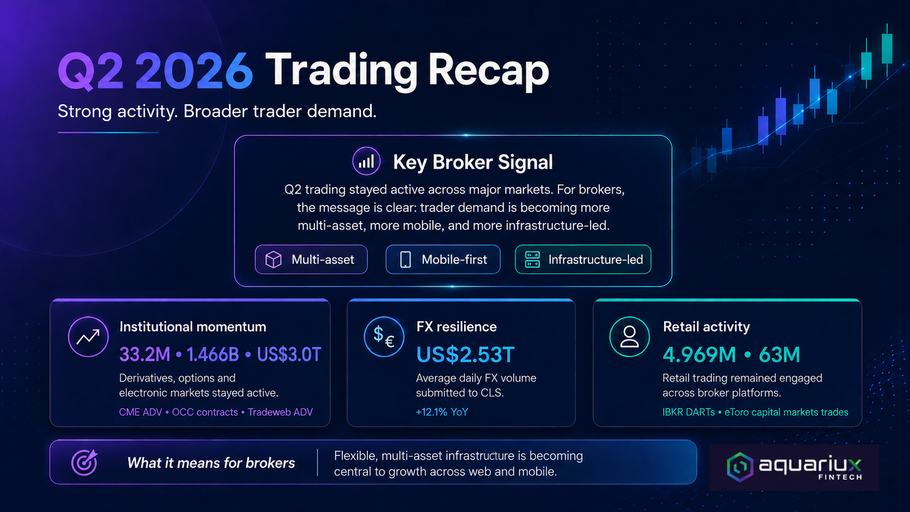
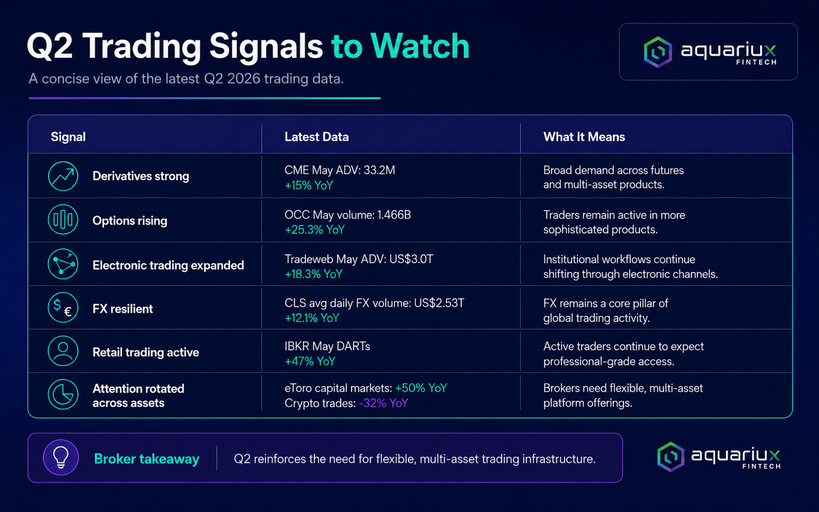
CME Group reported its highest May average daily volume on record at 33.2 million contracts, up 15% year-on-year. OCC reported 1.466 billion total options contracts in May 2026, up 25.3% year-on-year. Tradeweb reported US$62.3 trillion in total May trading volume and US$3.0 trillion in average daily volume, up 18.3% year-on-year. CLS reported USD 2.53 trillion in average daily FX volume submitted to CLS in May 2026, up 12.1% year-on-year.
Retail activity also remained strong. Interactive Brokers reported 4.969 million Daily Average Revenue Trades in May 2026, up 47% year-on-year, while eToro reported 63 million capital markets trades in April 2026, up 50% year-on-year.
Together, these numbers suggest a clear trend: trading demand remains healthy, but it is no longer concentrated in one market, one product type, or one trading journey.
For brokers heading into Q3 and Q4, this creates a practical question: is their trading platform ready for a market where traders expect broader access, smoother experiences, better mobile functionality, stronger platform control, and more flexible product coverage?
Q2 Trading Signals to Watch
Multi-Asset Demand Became the Main Platform Signal
One of the clearest lessons from Q2 2026 is that trading demand is spreading across asset classes.
At the institutional level, CME’s May 2026 activity showed volume across interest rates, equity indices, energy, agriculture, metals, foreign exchange, and cryptocurrency products. At the retail level, eToro’s April 2026 data showed strong growth in capital markets activity, while crypto trading declined year-on-year. eToro also reported that commodities accounted for approximately 60% of trading commissions in the first quarter, with commodity volumes increasing nearly fourfold year-on-year.
This matters because traders are not loyal to a single asset class. Their attention moves with volatility, macro themes, liquidity, news cycles, and opportunity. When gold is moving, commodity interest rises. When equities are volatile, traders look to indices and options. When digital assets regain momentum, crypto returns to focus. When central bank expectations shift, FX and rates become more important. For brokers, this makes multi-asset infrastructure more important.
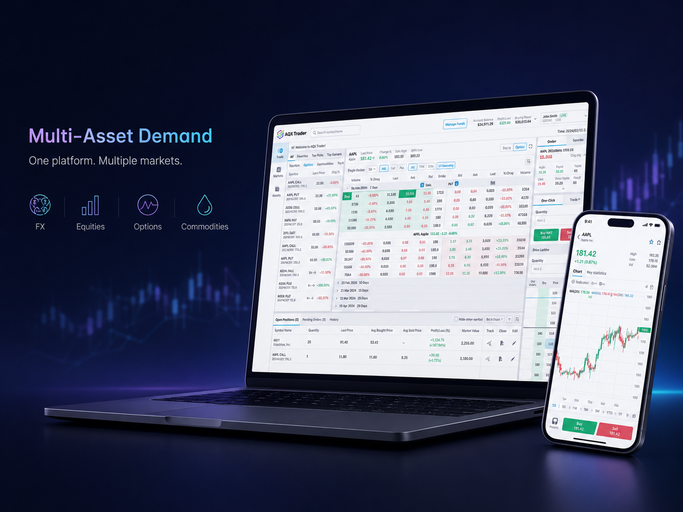
A broker platform built around one product category may struggle when trader demand rotates. A platform that can support FX, CFDs, commodities, equities, options, indices, and digital assets gives brokers more flexibility to adapt without forcing users into disconnected experiences.
This is where a multi-asset trading platform becomes more than a product feature. It becomes a business advantage. For brokers, the goal is not only to list more instruments. It is to deliver a trading environment where different products can sit inside one branded experience, supported by consistent charting, execution, account management, and mobile access.
Retail Traders Expect More Than Market Access
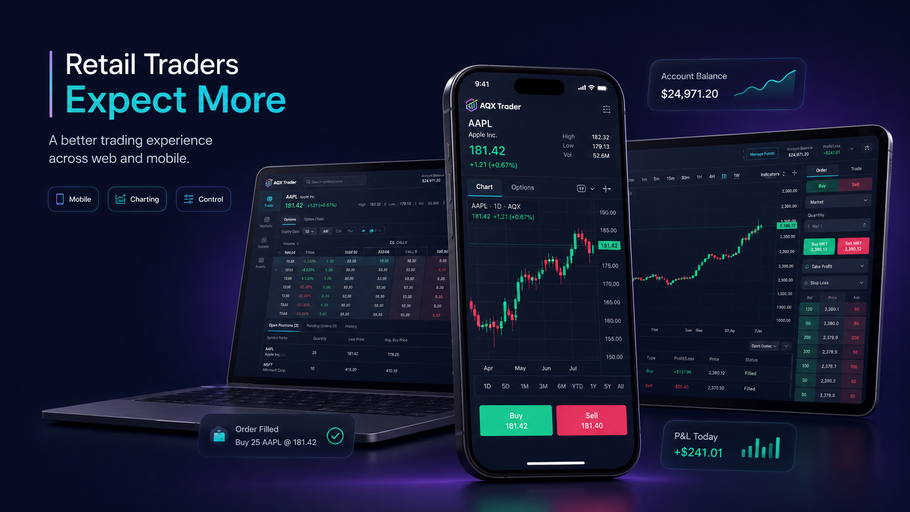
The retail trading story in Q2 was not simply about more accounts or more trades. It was about rising expectations. Interactive Brokers reported 4.995 million client accounts in May 2026, up 32% year-on-year, alongside 4.969 million Daily Average Revenue Trades. eToro reported 4.07 million funded accounts in April 2026, up 13% year-on-year.
These figures show that retail and active traders remain engaged. But active traders today expect more than basic access to markets. They expect platforms that help them analyse, execute, monitor, and manage their trading activity across devices.
That means the platform experience has become part of broker differentiation.
Traders increasingly expect:
- Fast and intuitive order placement
- Strong charting tools
- A smooth web and mobile experience
- Clear account and position visibility
- Multi-asset watchlists
- Better platform stability
- More transparent trading controls
- Features that support engagement, such as copy trading
- A trading experience that feels professional without being complicated
This is especially important as more traders move between desktop and mobile. A mobile trading platform can no longer feel like a reduced version of the desktop experience. It needs to support the way traders actually behave: checking markets on the go, managing open positions, reviewing charts, setting orders, and responding to volatility across sessions.
For brokers, this means market access alone is no longer enough. The platform must help turn access into experience. AQX Trader v3.0 is especially relevant in this context. With a redesigned web and mobile experience, enhanced mobile capabilities, improved charting, integrated copy trading, and stronger white-label branding, the platform reflects where trader expectations are heading: faster access, clearer usability, and more engaging multi-asset trading journeys.
Crypto Cooled, but Digital Asset Infrastructure Still Moved Forward
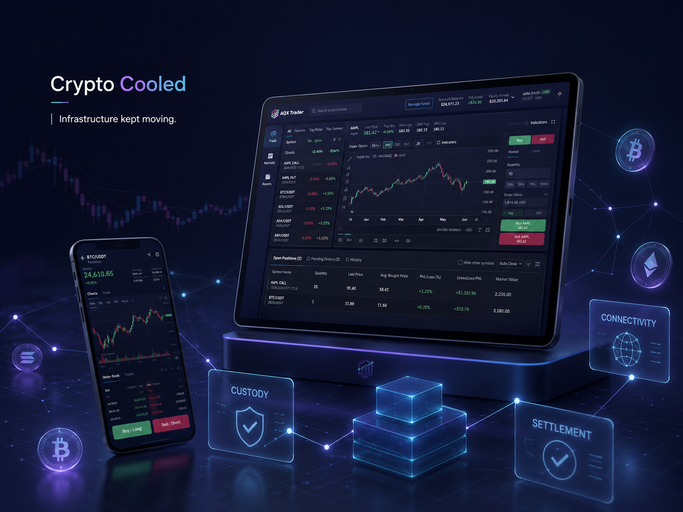
Another important Q2 signal is that crypto trading activity and digital asset infrastructure are not moving at the same pace. On one hand, eToro reported that April 2026 crypto trades fell 32% year-on-year. This suggests that crypto activity was softer compared with other capital markets activity during the period.
On the other hand, regulation and infrastructure around digital assets continued moving forward. This is an important distinction.
Crypto volumes can rise and fall with sentiment, but the broader digital asset ecosystem is becoming more structured. Regulators are focusing on digital asset platforms, stablecoins, custody, product classification, and trading access. Traditional market operators are also exploring tokenised securities and on-chain settlement models.
For brokers, this means digital assets should not be viewed only through the lens of short-term trading volume. The bigger question is platform readiness.
As digital assets, tokenised products, and stablecoin-related infrastructure mature, brokers may need to think more carefully about how products are configured, which users can access them, what risk controls apply, and how regional rules affect availability.
The lesson is not that every broker must rush into every digital asset trend. The lesson is that broker platforms need to be flexible enough to adapt as product formats evolve.
Trading Platform Regulation Is Moving Closer to Product Delivery
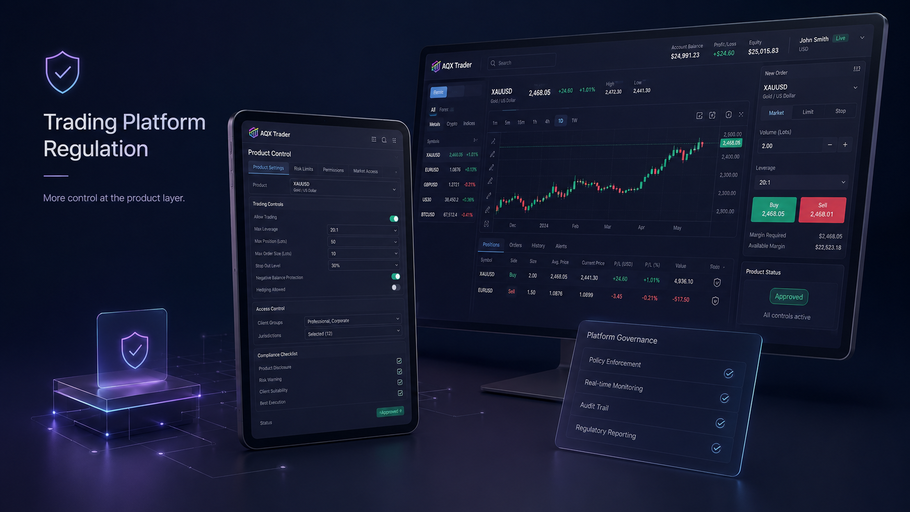
Q2 also reinforced another important point: regulation is moving closer to the platform layer.
In the UK, the FCA consulted on cryptoasset perimeter guidance, with firms expected to start applying for authorisation from September 2026. The proposed perimeter includes operating a qualifying cryptoasset trading platform, safeguarding or arranging safeguarding of qualifying cryptoassets, dealing, arranging deals, issuing qualifying stablecoins, and arranging qualifying cryptoasset staking.
In Australia, ASIC’s digital assets roadmap confirmed that the Digital Assets Framework Act 2026 will commence in April 2027, with ASIC tasked with licensing and supervising digital asset platforms and tokenised custody platforms. The roadmap also points to future standards around asset holding, transactions, settlement, and financial requirements.
In Europe, ESMA reminded firms that derivatives marketed as perpetual futures or perpetual contracts may fall within existing CFD product intervention measures if they provide leveraged exposure to underlying assets, including cryptoassets. Where these products meet the definition of CFDs, they may be subject to requirements such as leverage limits, mandatory risk warnings, margin close-out, negative balance protection, and restrictions on incentives.
For brokers, the message is clear: product labels are becoming less important than product behaviour.
A product cannot avoid scrutiny simply because it is marketed under a different name. Regulators are paying closer attention to how products function, how much leverage they provide, how risks are disclosed, and how clients access them. This has direct implications for trading platforms.
Brokers need better control over:
- Product availability
- Symbol configuration
- User permissions
- Leverage and margin settings
- Risk disclosures
- Regional product access
- Account-level settings
- Platform feature toggles
- Operational oversight
This does not mean that a trading platform replaces compliance. It means that platform configuration and broker-side control are becoming more important parts of responsible product delivery.
For brokers, flexibility must now be matched by control.
Q3 and Q4 Trading Outlook: What Brokers Should Watch Next
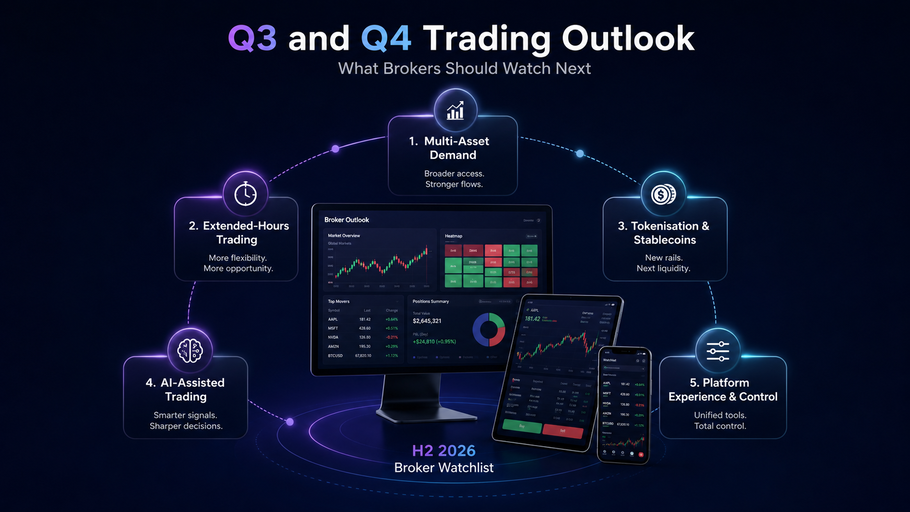
As the industry moves into the second half of 2026, brokers should watch five major trends.
1. Multi-Asset Trading Demand Will Stay Broad
The Q2 data suggests that trader attention is spread across multiple markets. Derivatives, options, FX, commodities, equities, and digital assets all remain relevant, but demand can rotate quickly.
This is likely to continue in Q3 and Q4.
Macroeconomic uncertainty, interest rate expectations, geopolitical developments, commodity volatility, equity market positioning, and digital asset sentiment can all shift trader behaviour. Brokers that depend too heavily on one asset class may find it harder to respond when trader interest moves elsewhere.
For brokers, the opportunity is to build trading environments that support multiple trader journeys from one platform.
A flexible multi-asset platform allows brokers to serve different segments, from active FX and CFD traders to users interested in equities, commodities, indices, options, or digital assets.
2. Extended-Hours Trading Will Become a Bigger Infrastructure Topic
The trading industry is also moving toward longer access windows.
Traditional market operators have begun exploring models linked to 24/7 operations, tokenised securities, instant settlement, and stablecoin-based funding. At the same time, some retail trading platforms have expanded selected products into longer trading windows.
This does not mean all markets will become fully 24/7 immediately. However, the direction is clear: traders increasingly expect more access, more flexibility, and fewer restrictions around when they can engage with markets. For brokers, this creates new platform expectations.
Extended access puts more pressure on:
- Platform uptime
- Web and mobile availability
- Account visibility
- Overnight risk controls
- Support operations
- Settlement processes
- Cross-region access
- Infrastructure resilience
Heading into Q3 and Q4, brokers should treat extended-hours trading as an infrastructure topic, not just a product feature.
3. Tokenisation and Stablecoins Will Move Closer to Trading Infrastructure
Tokenisation is becoming one of the most important industry watch areas for H2 2026.
Tokenised securities, tokenised gold, tokenised deposits, tokenised cash, and stablecoin-based funding models are increasingly part of the market infrastructure conversation. For brokers, this matters because tokenisation could eventually affect how products are accessed, traded, settled, and funded.
The most important point is not whether every broker should offer tokenised products immediately. The more practical question is whether their platform infrastructure can adapt as these products mature.
If tokenised products become more common, brokers may need to consider:
- New instrument types
- Different settlement models
- Stablecoin funding flows
- Regional product availability
- Custody and safeguarding requirements
- Client disclosures
- Platform-level permissions
- Integration with external infrastructure
This reinforces the need for platforms that are modular, configurable, and able to support future product expansion.
4. AI-Assisted Trading Will Raise Governance Questions
AI is also moving closer to trading workflows.
Recent industry developments show that AI agents and automated strategy tools are no longer only experimental concepts. They are beginning to appear in retail investing and trading environments, with potential use cases across analysis, execution, portfolio actions, alerts, and automated decision-making.
For brokers, this creates both opportunity and risk.
AI-assisted trading may improve user experience and market participation, but it also raises important questions around:
- User permissioning
- Human oversight
- Audit trails
- Risk monitoring
- Cybersecurity
- Suitability
- Accountability
- Third-party integrations
- Automated execution controls
For Q3 and Q4, the practical broker takeaway is not that every platform must become an AI trading platform. The takeaway is that trading infrastructure needs to be ready for smarter workflows while maintaining clear governance.
As AI becomes more common in trading, platform control will matter even more.
5. Platform Experience Will Need to Balance Speed With Control
The final H2 trend is the balance between trader experience and broker control.
Traders want faster platforms, cleaner interfaces, better mobile access, strong charting, smoother execution, and more engaging features. Regulators, meanwhile, are paying closer attention to product risk, leverage, disclosures, market conduct, and digital asset access.
This creates a clear challenge for brokers.
The winning trading platforms in H2 2026 will not simply be the ones with the most features. They will be the ones that combine front-end simplicity with back-end control.
That means brokers need platforms that can offer:
- A strong trader-facing experience
- Multi-asset access
- Web and mobile consistency
- Copy trading and engagement tools
- Better charting and market visibility
- Broker-side configuration
- Scalable infrastructure
- Integration flexibility
- Operational oversight
In other words, the platform must feel simple to the trader because the complexity is handled behind the scenes.
What This Means for Brokers Choosing a Trading Platform
The Q2 2026 trading recap points to one clear conclusion: brokers are entering H2 with more opportunity, but also more complexity.
Trading activity remains strong. Retail traders are still engaged. Institutional workflows are becoming more electronic. FX volumes remain resilient. Options and derivatives activity continue to grow. At the same time, crypto activity has become more selective, digital asset regulation is becoming more operational, and future product innovation is moving toward tokenisation, stablecoins, and AI-assisted workflows.
For brokers, this means platform decisions are becoming more strategic.
When evaluating trading technology, brokers should look beyond whether a platform can simply support order placement. They should consider whether it can support the full business environment they are moving into.
Key platform considerations include:
- Does the platform support multiple asset classes?
- Can it deliver a strong web and mobile experience?
- Does it offer intuitive charting and order management?
- Can brokers customise branding and user journeys?
- Does it support engagement tools such as copy trading?
- Can product settings, symbols, leverage, and permissions be configured?
- Can it integrate with the broker’s wider trading and operational ecosystem?
- Can it scale as trader activity grows?
- Can it support regional expansion and changing product demand?
This is why modern white-label trading infrastructure is becoming increasingly important.
For brokers, the future is not only about launching a trading platform. It is about launching a trading environment that can grow with the business.
Where AQX Trader Fits in the H2 Trading Outlook
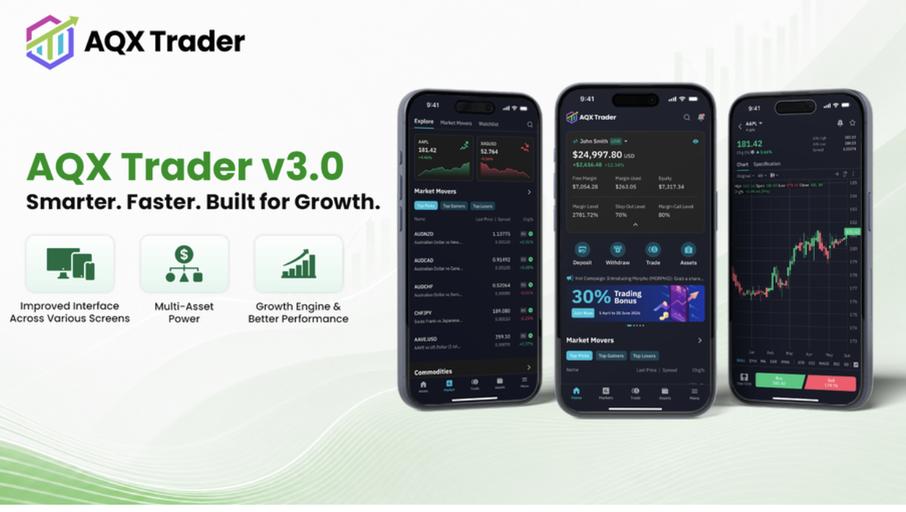
As brokers prepare for Q3 and Q4, the opportunity is not simply to add more instruments or chase the next market trend. The bigger opportunity is to build a trading environment that can support active traders, multiple asset classes, and evolving operational expectations.
AQX Trader is designed around this need.
Built as a multi-asset white-label trading platform, AQX Trader helps brokers deliver a branded trading experience across web and mobile. With AQX Trader v3.0, the platform has been enhanced with a redesigned user experience, stronger mobile capabilities, improved charting, integrated copy trading, and greater white-label branding flexibility.
These upgrades align closely with the direction of the market. As traders become more active across asset classes, brokers need platforms that can support product breadth. As users expect better digital experiences, brokers need cleaner web and mobile journeys. As engagement becomes more important, features such as copy trading can help brokers build more interactive trading communities. As operational demands grow, broker-side platform control becomes more valuable.
AQX Trader gives brokers a foundation to respond to these changes with greater flexibility.
It allows brokers to focus on building their brand, serving their traders, and expanding their product offering, while relying on trading infrastructure designed for a more demanding market environment.
Conclusion: H2 2026 Will Be About Flexible Trading Infrastructure
Q2 2026 confirmed that trading activity remains strong, but it also showed that the industry is becoming more complex.
Volumes are rising across major markets. Traders are rotating between asset classes. Retail expectations are increasing. Digital asset regulation is becoming more concrete. Tokenisation and stablecoins are moving closer to trading infrastructure. AI-assisted workflows are beginning to enter the conversation. Extended-hours access is becoming a more serious industry topic.
For brokers, the lesson is clear.
The second half of 2026 will not only reward those who offer more markets. It will reward brokers that can deliver better trading experiences with stronger platform flexibility, control, and scalability.
A modern trading platform needs to do more than provide access. It needs to help brokers adapt.
That is the role of modern white-label trading infrastructure: giving brokers the ability to serve active traders, expand across asset classes, maintain a strong branded experience, and prepare for the next stage of trading industry growth.
Explore how AQX Trader helps brokers deliver a flexible, branded multi-asset trading experience across web and mobile.
FAQ
What is a Q2 trading recap?
A Q2 trading recap reviews key trading activity, market volume statistics, product trends, and industry developments from the second quarter of the year.
Why does Q2 2026 trading data matter for brokers?
Q2 2026 trading data matters because it shows where trader activity is growing, which asset classes are gaining attention, and what platform capabilities brokers may need heading into the second half of the year.
What should brokers watch in Q3 and Q4 2026?
Brokers should watch multi-asset trading demand, extended-hours trading, tokenisation, stablecoin developments, digital asset regulation, AI-assisted trading, and rising expectations for web and mobile platform experiences.
Why is multi-asset trading important for brokers?
Multi-asset trading allows brokers to serve traders across different market interests, including FX, commodities, equities, options, indices, CFDs, and digital assets. This gives brokers more flexibility when trader demand shifts between markets.
How can brokers prepare for changing trading platform expectations?
Brokers can prepare by choosing trading infrastructure that supports multi-asset access, mobile trading, charting, copy trading, product configuration, risk controls, and white-label branding from one connected environment.
Latest News
