

May 2026 was the month AI and regulation stopped being future-tense. Anthropic deployed purpose-built banking agents at a Wall Street briefing alongside JPMorgan's CEO. OpenAI connected ChatGPT to over 12,000 financial institutions through Plaid. The CLARITY Act cleared the Senate Banking Committee in a historic bipartisan vote. And enforcement regulators across the US, EU, and Australia sent the same message: deferred compliance compounds, and the bill always arrives.
This edition of FinFocus breaks down each development, what happened, why it matters, and what brokers and fintech platforms need to do about it.
1. AI Has Entered Financial Services as a Direct Participant
Anthropic Launches 10 AI Agents for Financial Services and Unveils Claude Opus 4.7 at Wall Street Briefing
 5 May 2026, Source: Bloomberg / Fortune
On 5 May, Anthropic held an invite-only financial services briefing in New York with JPMorgan CEO Jamie Dimon on stage, and launched ten AI agent templates purpose-built for banking operations, pitch deck construction, KYC screening, compliance review escalation, and month-end close. The agents deploy as plugins across Claude Cowork, Claude Code, and Microsoft 365, embedding directly into the tools financial services professionals already use. The accompanying model, Claude Opus 4.7, was introduced as Anthropic's most capable financial-grade model to date.
The market responded immediately. FactSet fell 8.1%, Morningstar dropped over 3%, and both S&P Global and Moody's saw sharp selling pressure, investors pricing in disintermediation risk for financial data and research businesses in the same session as the announcement.
OpenAI Launches ChatGPT Personal Finance Tools with Plaid Integration Across 12,000 Financial Institutions
 15 May 2026, Source: TechCrunch
Ten days later, OpenAI launched personal finance tools for ChatGPT Pro subscribers in the US, connecting bank accounts and investment portfolios across more than 12,000 financial institutions through Plaid — including Schwab, Fidelity, Chase, Robinhood, American Express, and Capital One. The tools operate on real account data, not hypothetical scenarios, drawing on the financial reasoning capabilities OpenAI has been building through acquisitions including Hiro Finance in April 2026.
Within a single month, the two most prominent AI companies in the world both had live financial services products in market.
This shift matters in a specific way. Historically, financial guidance has been mediated by platforms, advisors, and access barriers. AI is now making that guidance scalable, programmable, and embedded in applications that over a billion people already use daily. For brokers and trading platforms, the comparison set for client-facing features is no longer other brokers — it is the AI tools clients use in their personal lives, now connected to their actual financial positions. Platforms that cannot match the clarity, speed, and personalisation of AI-native tools will face a growing expectation gap that does not close on its own.
The firms best positioned to respond are not those trying to replicate what Anthropic or OpenAI built. They are the ones who own what AI cannot yet replace: the trading infrastructure, the client relationship layer, and the operational model underneath.
2. Digital Asset Frameworks Are Moving From Intent to Structure
CLARITY Act Clears Senate Banking Committee in Historic Bipartisan Vote
 14 May 2026, Source: CoinDesk
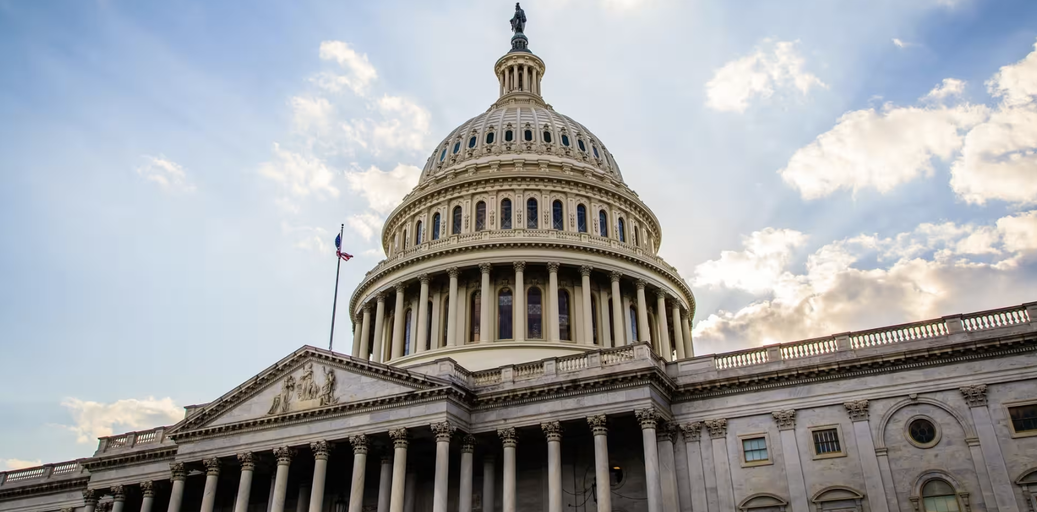
The Digital Asset Market Clarity Act passed the Senate Banking Committee on 14 May in a 15-9 vote, with two Democrats joining all 13 Republicans — the most consequential Senate action on crypto legislation to date. The bill formally divides oversight of digital assets between the SEC and CFTC, ending the jurisdictional ambiguity that has made product development, custody decisions, and institutional partnerships more complicated and more expensive than they needed to be.
Bitcoin climbed to $81,965 on the news. Coinbase surged 9.1%, MicroStrategy jumped 8.16%, and Robinhood added 6.16% — markets pricing in the structural implications of a bill that, if enacted, would reshape the operating environment for every firm with digital asset exposure.
The bill still requires a full Senate floor vote (60 votes to clear a filibuster), House reconciliation, and full agency rulemaking cycles at the SEC, CFTC, and Treasury. The White House has set a July 4 signing target, but enforceable rules are not expected before 2027. Legislative momentum is not the same as operational clarity.
SEC Prepares Tokenized Stock Innovation Exemption That Could Reshape On-Chain Equity Trading
 18 May 2026, Source: CoinDesk
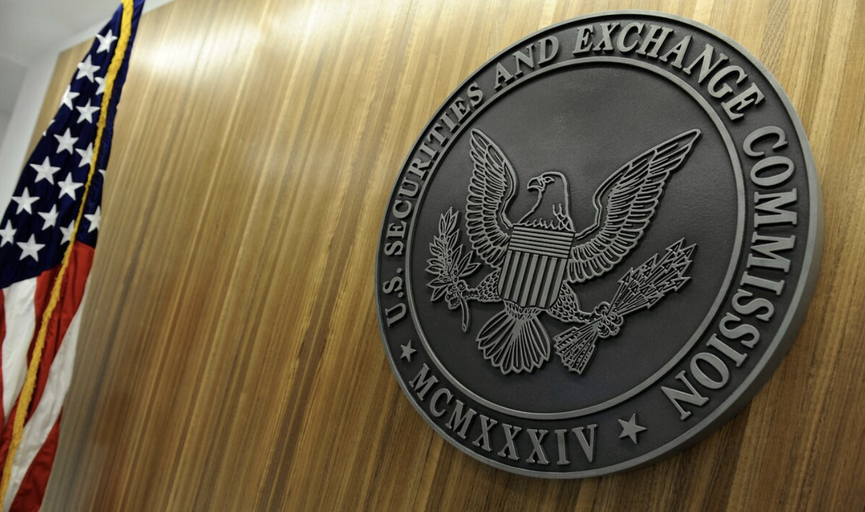
Alongside the CLARITY Act progress, the SEC announced preparation of an innovation exemption for tokenized stocks under Chair Paul Atkins' Project Crypto initiative. The framework would allow crypto-native platforms to offer on-chain US equity trading under lighter registration requirements during a defined experimental period, with exposure limits and mandatory disclosures as guardrails. The development follows the SEC's March and April 2026 approvals for tokenized trading on Nasdaq and NYSE, and builds on January 2026 guidance confirming that tokenizing a security does not change its legal classification.
The operational proof point arrived the same month. Ondo completed a cross-border tokenized Treasury settlement involving JPMorgan, Mastercard, and Ripple — executed in under five seconds. That is not a proof of concept. It is a production benchmark with tier-one institutional counterparties.
For brokers operating across crypto and traditional asset classes, both developments point to the same requirement: compliance architecture needs to be modular, where a new regulatory framework produces configuration changes rather than structural rebuilds. The advantage in 2027 will belong to platforms that used the gap between now and enforceable rules to build that flexibility, not the ones waiting for final text before starting.
3. Compliance Enforcement Is Compounding, Not Waiting
AMLA's Pan-European Roadshow Finds Structural AML Weaknesses Across All 27 Member States
 11 May 2026, Source: INSIGHT EU Monitoring / AMLA
The EU's Anti-Money Laundering Authority published the findings of Chair Bruna Szego's first pan-European roadshow, covering supervisors, financial intelligence units, and private sector representatives across all 27 member states. The findings are candid: supervisory capacity varies significantly, technology gaps are widespread, and enforcement consistency is uneven across member states.
AMLA flagged AI-enabled fraud, crypto-assets, instant payments, and sanctions circumvention as the fastest-growing risk categories — precisely the areas where broker operators have the most direct daily exposure. The report also identified GDPR obligations as creating operational friction in AML monitoring, with data retention and information-sharing requirements sitting in direct tension with privacy rules. That conflict has no clean resolution without legislative action, and it is actively shaping what effective compliance infrastructure looks like in the EU today.
Full operational supervision of the 40 highest-risk EU financial institutions does not begin until 2028. The gap between the current fragmented supervisory environment and that centralised framework is the period of highest compliance uncertainty for cross-border operators.
Q1 2026 Global Enforcement Review: Data Privacy and Controls Failures Drive Multi-Jurisdictional Fine Surge
 14 May 2026, Source: FinTech Global
The Q1 2026 global enforcement review from FinTech Global reinforced the same message from a different direction. In the US, Canaccord Genuity received a coordinated FINRA, SEC, and FinCEN penalty covering AML system failures, suspicious activity reporting deficiencies, best execution failures, and trading supervision gaps spanning 13 years — from 2012 to 2025. In Australia, Binance Australia Derivatives was fined $6.9 million by the Federal Court following ASIC's investigation into the misclassification of 524 retail clients as sophisticated investors, granting them access to leveraged products for which they were unsuitable.
Both cases illustrate the same principle: deferred remediation does not reduce exposure. It accumulates it. A compliance failure that runs for 13 years does not produce a proportionally smaller penalty than one discovered in year two. Multi-agency enforcement — FINRA, SEC, and FinCEN acting in the same matter — is becoming the standard for significant broker-dealer failures, not the exception.
For firms with EU client exposure, the practical implication of the AMLA findings is to calibrate compliance programmes to the stricter end of the supervisory range, not the most permissive national interpretation. For every broker, the Q1 enforcement review is a reminder that the gap between a written compliance policy and an operationally effective one is exactly what regulators are looking for now.
From Possibility to Accountability
Across AI, digital assets, and regulatory enforcement, May 2026 delivered a consistent signal: the structural changes that have been building across the industry are no longer incoming. They are here.
AI has arrived in financial services not as a feature inside a platform roadmap, but as a direct market participant with distribution advantages and institutional backing that no broker can replicate organically. Digital asset regulation is converging across jurisdictions toward formal frameworks, with enforceable rules on the horizon and production-grade infrastructure already running. And compliance enforcement is making clear that the tolerance for the gap between policy and practice is narrowing — consistently, across every major jurisdiction.
The firms best positioned for what comes next will not be the ones that react fastest to each individual development. They will be the ones that:
- Build trading and compliance infrastructure that adapts across jurisdictions and regulatory environments
- Own the client relationship and operational layers that AI cannot replace
- Maintain systems that are auditable, resilient, and ready before the examination arrives
This is no longer about preparing for change. It is about operating effectively inside it.
AQX Trader is built to be part of that conversation.
Explore AQX Trader — the modular trading platform built to acquire and retain traders →
Start a conversation and get a quick demo mapped to your brokerage workflows →
FinFocus is Aquariux's monthly fintech intelligence briefing. Published 29 May 2026.
Latest News
