

Hello, Fintech Innovators!
August was a month of infrastructure showing its hand.
The AI trade, which spent two years looking like a one-way bet, posted its worst month on record as crowded positioning unwound, while at the other end of the market retail traders kept building their own automated strategies. Japan's largest bank moved to settle government bond repos on blockchain rails, and Circle's stablecoin infrastructure picked up a privacy layer aimed squarely at institutional objections. In Europe, the AI Act stopped being a compliance roadmap and became an enforcement reality. In Asia, Hong Kong and the Mainland opened ten new doors between their markets.
But before any of that, we are starting somewhere different this month. We are getting on a plane.
(Quick poll: Heading into Q4 2026, what is shaping your platform roadmap most: AI-driven trader tooling, tokenised settlement infrastructure, or regional regulatory divergence? Let us know.)
The Main Event: We Are Coming to Mumbai
What Ashniel Will Be Talking About at Money Expo India 2026
Source: Aquariux | August 2026
Before we move into this month's fintech signals, a short note on where you can find us.

Our Business Development Manager, Ashniel, will be on the ground at Money Expo India 2026 on 29 and 30 August at the Jio World Convention Centre in Mumbai. The event expects more than 20,000 attendees and 300 exhibitors across trading, fintech, investment platforms, and financial services, which makes it one of the better rooms in APAC for conversations about where broker technology is heading.
We are not taking a booth this time. That is deliberate. It means Ash's two days are structured around scheduled conversations rather than floor traffic, and there is room in the calendar for brokers who want to go deeper than a product sheet.
If you are attending and want to talk about multi-asset infrastructure, white-label deployment, or what AQX Trader would look like operating under your brand, reach out and lock in a time with Ash before the schedule fills.
And if you want to see the platform before Mumbai, our latest article makes a case that most brokers underrate: the demo environment is where platform evaluation actually begins, not where it ends. We break down what brokers should genuinely test inside a demo, from order workflows to cross-device consistency, and where a demo stops being able to tell you anything useful.
Ready to rethink your trading platform? Let's connect: https://lnkd.in/ggzz_dRt
AI Frontlines
Retail Traders Are Building Their Own AI Trading Bots
 Source: Bloomberg | 2 August 2026
Summary
Bloomberg profiled a growing group of independent traders using new AI tools to build automated trading programs of the kind that once required hedge fund research teams. The results so far are humbling. One software sales executive spent more than a year writing Python, running simulations, and tracking hundreds of stocks, only to find his options bot barely matched a simple index fund. He gave up.
The story is not the returns. It is that the attempt is now within reach of a person working evenings and weekends from a home office, and that the tooling keeps improving.
Key Insights
- **The build barrier has collapsed. **Strategy coding, backtesting, and data access used to be the moat. AI-assisted development has removed most of the technical friction, even where the alpha remains elusive.
- **Effort is migrating up the stack. **Traders who once optimised entries and exits manually are now optimising systems, which changes what they need from a platform.
- **Disappointing results have not slowed adoption. **The gap between expectation and outcome is wide, but the number of traders attempting it keeps growing.
Implications for Fintech
For brokers, a rising share of retail traders now arrives with automation expectations attached. API access, order-flow tolerance for programmatic activity, historical data availability, and clear permissioning are moving from advanced-user requests toward baseline questions during account selection.
There is a support dimension too. Automated activity generates different failure modes than manual trading: runaway logic, rejected orders at volume, and confusion about execution behaviour. Platforms need visibility and controls to match.
Aquariux's Comments and Thoughts
The interesting part is not that retail traders are building bots. It is that most of them are finding out the hard way that a strategy is easier to code than to make profitable.
For brokers, that gap is the opportunity. Traders experimenting with automation need infrastructure that keeps their activity governable and their expectations grounded, plus guided alternatives for those who conclude that building their own is not worth the effort. Serving both groups from the same platform is an architecture question.
The AI Trade Posts Its Worst Month on Record
 Source: Finance News Network | 10 August 2026
Summary
The S&P 500 dipped just 0.1% in July and stayed near record highs. Underneath that calm surface, momentum strategies tied to artificial intelligence went through one of the sharpest unwinds ever recorded.
Goldman Sachs estimates put its high-beta basket down 41%, its technology basket down 48%, and its AI basket down 38% during the drawdown. Even after a rebound, high-beta momentum finished July down 28%, the worst month on record, while an index excluding major AI enablers reached a new peak. Hedge funds recorded one of their largest gross exposure reductions since 2020 as models responded to volatility signals and forced selling regardless of price.
Key Insights
- **Index-level calm concealed strategy-level violence. **Headline stability told brokers almost nothing about what their more active clients were experiencing.
- **Crowding was the mechanism. **Capital from hedge funds, systematic strategies, and multi-manager platforms had concentrated into the same semiconductor, memory, and AI infrastructure names. When signals flipped, the exit was narrow.
- **Systematic selling amplified the move. **Models sold on trend and volatility inputs rather than valuation, turning a positioning shock into a liquidation event.
Implications for Fintech
Volatility of this shape drives volume, and volume drives platform stress. Order rejection rates, latency under load, margin recalculation speed, and client-facing communication all get tested on days when correlated positions unwind at once.
It also drives support load. Traders who were long the same crowded theme tend to arrive at the support queue simultaneously, asking the same questions about execution and margin. Platform transparency reduces that burden considerably.
Aquariux's Comments and Thoughts
Every broker's infrastructure looks fine on quiet days. July was a reminder that the days that matter are the ones where everyone moves at once.
The questions worth asking a technology provider are not about peak theoretical throughput. They are about behaviour under correlated stress: what happens to execution quality, what the client sees when an order is rejected, and how quickly the broker can adjust exposure controls without waiting on a release cycle.
On-Chain Pulse
MUFG Takes Japan's Government Bond Repo Market On-Chain
 Source: CoinDesk / Nikkei Asia | 13 August 2026
Summary
Mitsubishi UFJ Financial Group, working with Digital Asset and Progmat, has begun a proof-of-concept to settle Japanese government bond repo transactions on the Canton Network. The trial runs across four MUFG entities and targets real-time, 24/7 delivery-versus-payment settlement in a market with roughly 270 trillion yen in outstanding balances.
The project sits under the Financial Services Agency's Payment Innovation Project. MUFG is evaluating tokenised deposits and stablecoins as the cash leg, with the proof-of-concept expected to run through 2026 and commercial deployment considered between fiscal 2027 and 2029. Notably, the bonds themselves stay inside Japan's existing book-entry system rather than becoming standalone tokens.
Key Insights
- **This is a hybrid model, not a rebuild. **Japan is inserting programmable settlement into existing legal structures rather than migrating the securities system onto public infrastructure.
- **The settlement asset choice matters more than the blockchain. **Tokenised deposits remain bank liabilities, while stablecoins carry different reserve and redemption structures. That decision will shape regulatory treatment.
- **APAC is now moving in step with earlier US and European work. **JPMorgan's Kinexys has supported intraday Treasury repo since 2020. Japan bringing JGB collateral on-chain closes a regional gap.
Implications for Fintech
Settlement expectations move slowly and then all at once. When the deepest collateral markets shift toward instant, always-on settlement, the assumptions built into every downstream system eventually shift with them.
For brokers, the near-term relevance is less about repo and more about direction. Twenty-four-hour markets, real-time margin, and continuous settlement all place demands on platform architecture that batch-oriented systems were never designed to meet.
Aquariux's Comments and Thoughts
The detail we find most telling is that MUFG left the bonds inside the existing book-entry system. That is not a compromise. It is a recognition that legal certainty and property rights are worth more than architectural purity.
The same logic applies to broker platforms. The goal is rarely to replace what works. It is to add programmability, control, and speed around it without breaking the parts that regulators, auditors, and clients already rely on.
Privacy Becomes the Next Stablecoin Battleground
 Source: CoinDesk | 12 August 2026
Summary
Miden, a zero-knowledge blockchain built around client-side proving, announced it will issue USDCx, a stablecoin backed one-to-one by Circle's USDC held in xReserve smart contracts. The token is expected to launch alongside Miden's mainnet.
The proposition is confidentiality by default: holders can transact without publishing balances, counterparties, or transaction histories to a public ledger, while retaining the ability to disclose selectively to auditors, regulators, or counterparties. It targets what has become the most cited institutional objection to public blockchain settlement, which is that trading firms cannot operate with their positions visible to anyone with a block explorer.
Key Insights
- **Transparency was always the sticking point, not volatility. **Firms will not publish payroll, treasury activity, or positioning on a public ledger, regardless of how stable the token is.
- **Selective disclosure is the design compromise. **Privacy by default with compliance access on demand is an attempt to replicate what account-based systems already provide.
- **Circle's infrastructure is becoming a settlement layer for others. **Issuing through xReserve rather than creating a separate dollar reserve keeps the backing familiar while the privacy properties sit at the chain level.
Implications for Fintech
If confidential settlement matures, one of the last structural barriers between institutional finance and on-chain rails weakens considerably. That has second-order effects on funding flows, cross-border settlement, and eventually on how quickly client money can move between venues.
For brokers, the practical question is preparedness rather than adoption. Payment and settlement rails evolve faster than platform replacement cycles, which makes integration flexibility more valuable than any specific rail decision made today.
Aquariux's Comments and Thoughts
Privacy has been the awkward subject in institutional crypto for years. Everyone wants it, nobody wants to be seen asking for it, and the compliance framing has to be watertight before anyone will touch it.
Whether this particular implementation succeeds matters less than what it signals. The industry has stopped treating full public transparency as an unavoidable cost of on-chain settlement and started engineering around it.
RegTech and Compliance
EU AI Act Enforcement Begins
 Source: European Commission | 1 August 2026
Summary
From 2 August, the European Commission's AI Office and national authorities began enforcing the AI Act, with new transparency obligations taking effect on the same date.
Chatbots and other interactive AI systems must now disclose that users are dealing with AI rather than a human. AI-generated or manipulated content must be labelled and carry machine-readable marks. Enforcement is shared across the AI Office, national market surveillance authorities, and the European Data Protection Supervisor, with penalties reaching 15 million euros or 3% of global annual turnover, whichever is higher. The obligations apply to any provider or deployer placing AI systems on the EU market or whose AI outputs are used within the EU, regardless of where the firm is based.
Key Insights
- **Extraterritorial reach is the detail most firms underestimate. **Being based outside the EU does not exempt a provider whose AI outputs reach EU users.
- **Disclosure obligations hit client-facing tools first. **AI support agents, market commentary generators, and conversational assistants all fall within scope.
- **The obligations applied immediately to systems already on the market. **There was no grandfathering for in-scope systems, with only a limited transitional window for the marking and detection requirement on existing generative systems.
Implications for Fintech
For brokers and platforms operating into Europe, this converts AI governance from a roadmap item into an audit question. Which AI features are live, what they disclose, who is accountable for their outputs, and whether the disclosure appears where a user will actually see it.
It also raises a vendor question. Firms deploying AI features supplied by a technology partner need clarity on where provider obligations end and deployer obligations begin, because the regulation distinguishes between the two and assigns duties to each.
Aquariux's Comments and Thoughts
The pattern here should feel familiar to anyone who lived through MiCA. Frameworks are published, timelines look generous, and then enforcement arrives while a meaningful share of the market is still treating compliance as a future project.
For brokers, the useful posture is knowing which AI touchpoints exist across the platform, who supplies them, and how quickly a disclosure or a feature toggle can be changed. Configurability is what turns a regulatory update into a settings change rather than a development sprint.
Hong Kong and the Mainland Open Ten New Doors
 Source: SFC | 3 August 2026
Summary
The Securities and Futures Commission and the China Securities Regulatory Commission jointly announced ten measures to deepen cooperation between the Hong Kong and Mainland markets.
The package spans cross-boundary listings and fundraising, exchange traded funds, index collaboration, renminbi-denominated futures products, pilot programmes for climate-related transition plan disclosure, and a streamlined route for securities and futures professionals at Hong Kong banks to obtain Mainland professional qualifications. Both regulators framed the measures as reinforcing Hong Kong's position as an international financial centre while strengthening regulatory coordination between the two markets.
Key Insights
- **Product breadth is expanding alongside access. **Renminbi-denominated futures and index collaboration point toward more instruments, not just easier routing to existing ones.
- **The professional qualification measure is a talent signal. **Streamlining cross-boundary credentials makes it materially easier to staff operations across both markets.
- **Regulatory coordination is being positioned as infrastructure. **Both bodies framed closer supervisory cooperation as a foundation for market development rather than an administrative detail.
Implications for Fintech
For brokers with APAC ambitions, Hong Kong's connectivity to the Mainland remains one of the strongest arguments for a regional presence. More products and clearer cross-boundary routes translate into a wider addressable offering for firms positioned to access them.
It also reinforces a familiar operational requirement. Serving clients across jurisdictions with different product eligibility, disclosure standards, and regional rules demands platform-level control over what is available to whom, and where.
Aquariux's Comments and Thoughts
Two regulatory stories in one month, pulling in opposite directions. Europe is tightening obligations on how technology may be deployed. Hong Kong is widening the channels through which products may flow.
Brokers operating across both will need platforms that can hold two different postures at once: restrictive where regulation demands it, expansive where opportunity allows it, and switchable between the two without an engineering project each time a rule changes.
On a related note, we will be at iFX EXPO Asia in Hong Kong this October. More on that in the coming editions.
In Case You Missed It
Two recent reads for brokers evaluating their trading technology and infrastructure.
Why a Demo Trading Platform Matters More Than Brokers Think.
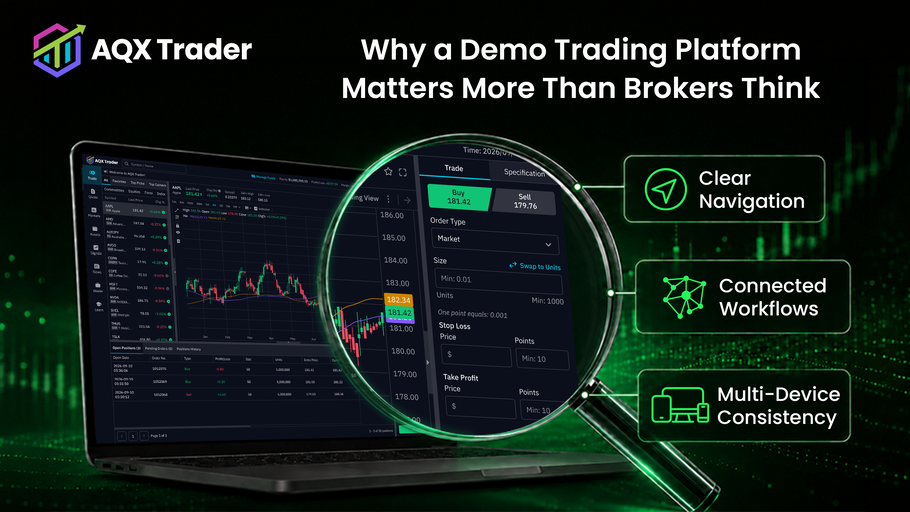
A demo is where platform claims meet the actual product. This piece looks at what brokers should evaluate beyond the feature list, from trader-facing workflows and multi-device consistency to branding, configuration and overall platform maturity.
OMS vs EMS: What Brokers Need to Know About Trading Platforms.
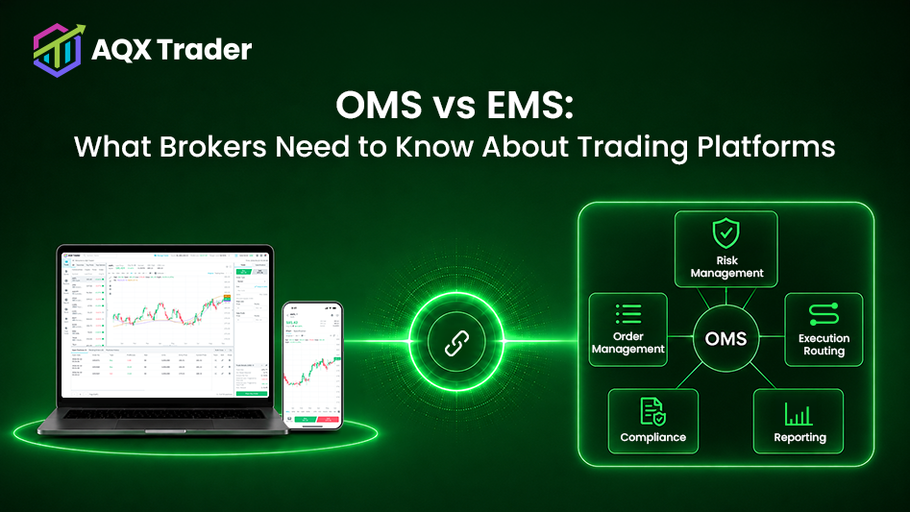
The front end, OMS and EMS each handle a different part of the trading experience. This piece breaks down where each layer fits, why integration matters, and how architecture issues can eventually surface as execution problems, operational friction and trader churn.
August 2026 Wrap: The Infrastructure Question Nobody Can Postpone
If August has a single message, it is that the pressure has moved from the surface to the foundations.
AI is now both a trader tool and a regulated activity. Retail traders are building automated strategies from home offices while the EU begins enforcing binding obligations on how AI may be deployed. Brokers sit between those two realities, serving increasingly sophisticated automation demand while carrying accountability for the AI features they put in front of clients.
Settlement infrastructure is being rebuilt underneath the market. Japan's largest bank is testing 24/7 on-chain settlement for its government bond repo market, and privacy-preserving stablecoin rails are being engineered to remove the last institutional objection. Neither changes broker operations this quarter. Both change the assumptions those operations are built on.
Regional divergence is widening. Europe is tightening. Hong Kong is opening. Firms operating across both need platform behaviour that differs by jurisdiction without differing in quality.
The common thread is that regulatory change, product evolution, and trader expectations continue arriving faster than platform replacement cycles. The advantage goes to brokers whose infrastructure can absorb change rather than resist it.
That is the operating model AQX Trader is built around. As a multi-asset white-label trading platform, AQX Trader gives brokers a consistent branded experience across desktop, web, and mobile, direct control over instruments, leverage, permissions, and regional settings, and the integration flexibility to adapt as markets and rules move.
Explore AQX Trader, the modular trading platform built to acquire and retain traders.
Start a conversation and get a quick demo mapped to your brokerage workflows.
Experience AQX Trader Today → https://www.aquariux.com/solutions/trader/demo/?utm_source=linkedin&utm_medium=organic&utm_campaign=aq_finfocus_aug2026
Based on publicly available sources; this newsletter is not financial or legal advice.
Latest News
