
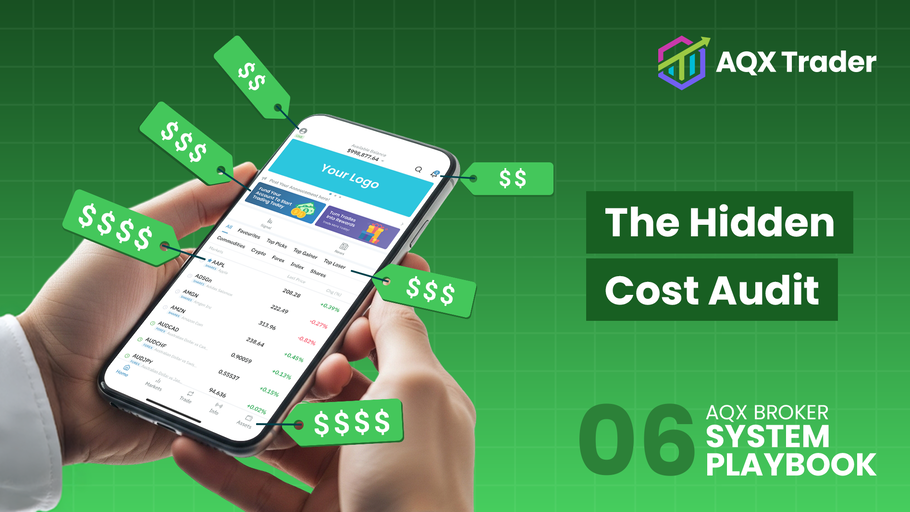
A “cheap” platform rarely breaks in the sales deck. It breaks later, quietly, in operations.
Month one looks fine. Traders log in. The UI holds up. Execution feels smooth enough to keep people moving, which is exactly the point of removing friction at the moment that matters most. And when the interface stays clean instead of cluttered, traders hesitate less and support teams breathe a little easier.
Then the real work starts. Someone wants a new instrument category, a banner update, a change to demo leverage, a feature toggle, a new content feed, a calendar, a routing tweak, a new compliance message, a new onboarding flow. None of these are “big builds.” They’re normal requests. They’re also where operational reality shows up, especially when systems around OMS routing, controls, and integrations weren’t built to absorb change without drama.
That’s the trap. The cost isn’t always in the subscription. It’s in the hidden ops cost: the ongoing labor, delay, and breakage that shows up every time the business needs the platform to behave like a living product instead of a static install.
This playbook is a practical way to audit that hidden cost before it becomes a long-term tax.
Cheap Is a Number. Expensive Is a Pattern.
 Platforms get labeled "cheap" because the monthly fee looks low. But a broker's P&L doesn't run on monthly fees. It runs on throughput: how fast changes can happen, how often the stack breaks, and how many people are needed just to keep the machine steady.
The hidden cost tends to follow a familiar pattern.
First comes the change tax. Basic updates that should be routine end up gated behind development cycles or vendor tickets. The broker becomes dependent on someone else's backlog for everyday decisions. Time-to-market slows down. Teams start batching changes "for later," which is code for "when it's painful enough." Then comes the integration tax. Brokers don't run a platform in isolation. Traders expect charts, calendars, news, and tools they already recognize. Operations expects connectivity and clean workflows. When those integrations aren't ready, or they exist only as one-off custom builds, every update becomes a potential failure point. What was sold as "flexible" becomes "fragile."
After that comes the incident tax. Not the dramatic kind. The ordinary, recurring ones. Small breaks that consume hours: a connector that fails after a third-party API update, a mismatched version, a brittle data bridge, a workaround that becomes permanent. Each incident shows up in support load, dealer escalations, and time spent pulling logs after volatile sessions.
Finally, there's the scale tax. The platform works until it meets real volatility. A news spike. A marketing campaign that actually converts. A surge in logins. This is when "cloud" stops being a slide and starts being an operational truth: either the system scales cleanly, or growth becomes a stability risk. None of this is abstract. It's the difference between a platform that stays calm under pressure and one that demands constant attention to remain usable.
The Hidden Cost Audit
Before any platform decision hardens into a long contract, the fastest way to protect lifetime cost is to run a simple audit. It's not complicated. It's just honest.
Start with change. Not theoretical change—monthly, operational change. The things that happen all the time: updating banners and announcements, adjusting demo settings, enabling or disabling key trading features, curating popular symbols, keeping the platform aligned with marketing and client comms.
The question isn't "can it be done?" The question is: how is it done, and who has to be involved?
If routine changes require engineering time or vendor tickets, the platform is already building a cost base that grows with every request.
Next, audit integrations the same way. A broker ecosystem isn't a nice-to-have; it's the baseline expectation. Charting, market news, economic calendars, connectivity layers—these aren't "add-ons." They're part of what traders experience as the product. If integrations are mostly custom work, that's not a one-time project. It's ongoing integration debt: maintenance, updates, breakage, and repeated testing.
Then audit manual work. This is where hidden cost hides best: spreadsheets, human confirmation steps, repeated admin tasks, operational routines that exist because the platform can't carry them. Manual workflows scale linearly with growth. If manual steps are present at launch, they don't stay manageable. They compound.
Finally, audit scaling and reliability in plain language. What happens during peak demand? What happens during high-impact news? What happens when activity spikes and the platform has to stay responsive, not just technically "online"? A good answer isn't a promise. It's an operating model. If those four areas—change, integration, manual work, scaling—feel uncertain or vendor-dependent, the platform may still look cheap. But it won't behave cheap.
Where AQX Trader Reduces The Hidden Bill
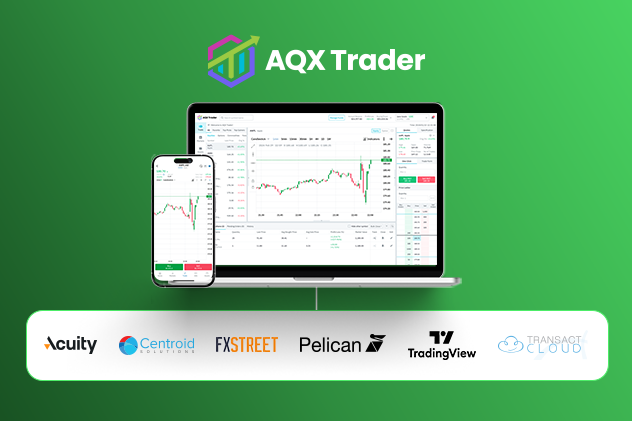 AQX Trader is built as an ecosystem, not a closed box, so brokers aren't forced to recreate tools the market already trusts or carry integration debt that quietly balloons over time.
That approach shows up in the partner layer. TradingView sits naturally inside the experience with charting that traders already know how to use. Acuity Analytics adds AI-driven ideas and insight that help users cut through noise faster. FXStreet brings timely market coverage and context for decision-making when conditions shift quickly.
On the infrastructure and execution side, Centroid Solutions strengthens connectivity and performance where reliability actually matters. TransactCloud supports smoother transaction flows so funding doesn't become the weak link in the journey. Rounding it out, Pelican Network adds a social-style layer that keeps engagement from feeling purely transactional—giving brokers another way to build stickiness without turning the platform into a patchwork of custom builds.
The Conclusion Most Brokers Learn Too Late
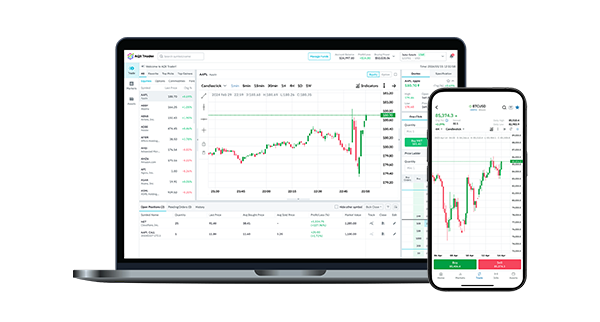 A platform decision is rarely just a product decision. It's an operating model decision.
When a platform is cheap but operationally heavy, the costs don't arrive as one big invoice. They arrive as slow drag: ticket queues, workarounds, maintenance cycles, support escalations, constant dependency on someone else to make normal changes.
The Hidden Cost Audit exists to make that drag visible upfront. Because once it's visible, it's avoidable.
AQX Trader is built around the opposite premise: broker control without constant engineering, integrations that don't become ongoing projects, and infrastructure that can handle the sessions that actually test a platform.
"Cheap" is what gets approved. Predictable is what scales. Contact us now.
data s
Latest News
