
Upgrades move fast when the basics are in place. In Playbook 01, we showed how brokers ship on day one with Broker CMS controls, announcements, and clean rollout mechanics. In Playbook 02, we kept traders in flow by making desktop and mobile feel like one platform, not two. What still slows teams is lock-in at the execution layer: routes welded to a single OMS, fragile FIX sessions, and post-trade dependencies that punish change. This chapter tackles that bottleneck so you keep your OMS and liquidity paths, connect over FIX and REST, and ship value without rewrites.
The Retention Gap The Real Blocker
Interfaces rarely kill a project. Execution changes do. The moment a new front end asks to alter routing tables, account state machines, or drop copy formats, risk climbs. Those artefacts anchor finance reconciliation, compliance reviews, and venue-specific rules like session windows and reject handling. Touch them and you multiply edge cases. Leave them intact and you keep the backbone of daily operations stable. The pragmatic stance is clear. Treat the OMS as the source of truth. Use FIX for orders and REST for admin and health, and let existing venue logic pass through unchanged. Add value at the edge with policy controls, feature flags, and clear observability, not by re-writing the routes that already work.
Outcome for brokers: Preserve existing OMS and EMS behaviour. Reduce unknowns. Shorten the path to first trade.
Multi-OMS Integration that Respects Your Routes
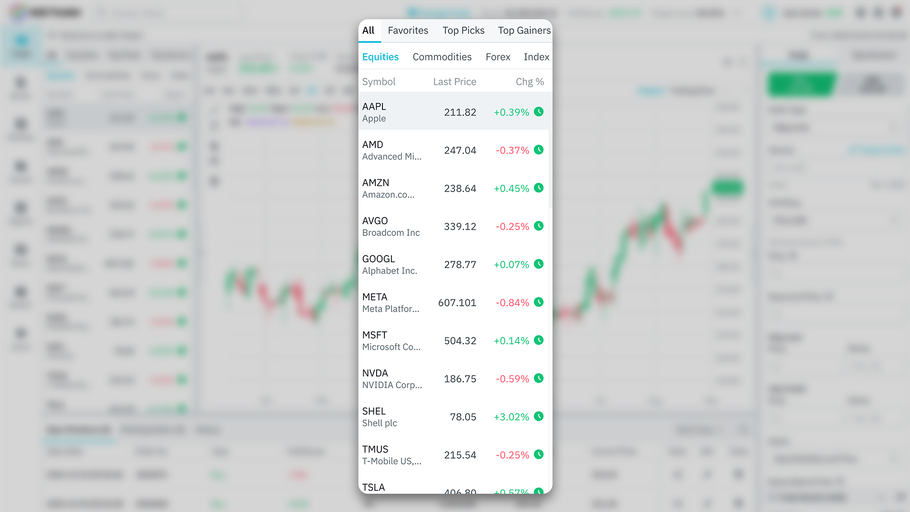 AQX Trader connects to the OMS you use today. FIX carries orders into the right sessions. REST handles admin, reporting, and health checks. Liquidity relationships remain intact and post-trade files keep landing where finance expects them. For a multi-asset desk running FX, indices, and crypto, we mapped instrument buckets to existing OMS rules and left venue logic untouched. Symbol-level telemetry confirmed latencies and rejected codes before wider rollout. The front end moved forward while execution stayed familiar.
What this looks like in practice
- Primary and secondary FIX sessions per OMS with monitored heartbeats and alerts.
- Instrument or venue routing passes through unchanged, including time windows.
- Drop copy reconciliation validates fills, cancels, and partials against platform state.
- REST endpoints expose session health and recent reject patterns to operations.
Outcome for brokers: Faster go-live and steady routing without renegotiating liquidity.
Embedded EMS Controls When Speed & Clarity Matter
Markets do not wait for weekend releases. Venues degrade. Symbols misprice. AQX Trader includes optional embedded EMS controls that apply routing decisions before orders reach the OMS. Brokers use them for venue failover, throttle rules on volatile pairs, and time-boxed access to new instruments.
Controls that simplify the day
- Failover on venue health with automatic revert when conditions recover.
- Symbol buckets with rules for margin, throttle, and access.
- Time-based routing windows for sessions that require them.
- Clear audit trails for each policy change by role and user.
Outcome for brokers: Clean interventions without emergency code. Lower blast radius when markets move.
Broker CMS: Symbol Governance Across Live & Demo
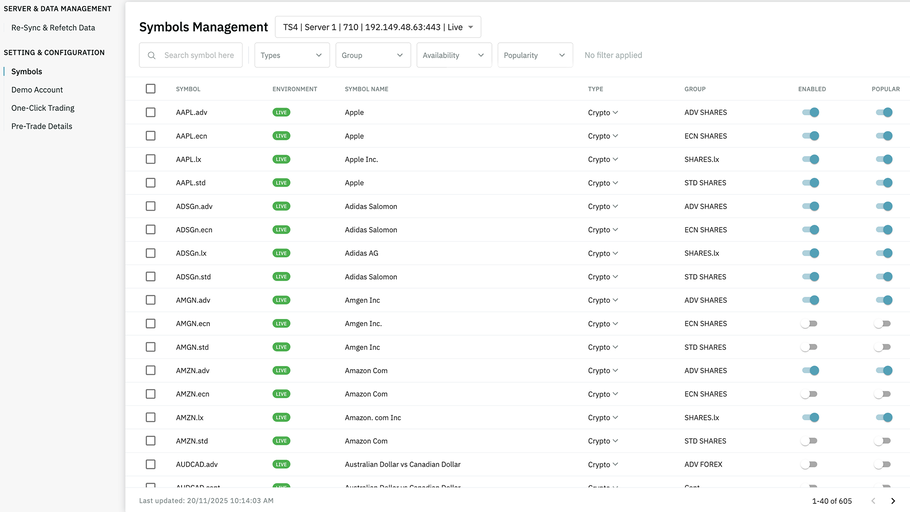 Day-to-day control sits in the broker CMS. Operations maintain one catalogue for live and demo with controlled differences. New symbols arrive in the demo first with safe leverage and margin. Popular lists surface the right instruments for new accounts. Kill-switches take a symbol offline in seconds when a pricing feed misbehaves. Precision, tick size, and sessions align by asset class, so order entry and charts feel consistent across iOS, Android, Mobile Web, and WebTrader.
What good governance includes
- Per-environment symbol lists with contract size, precision, and sessions.
- Margin and leverage by group, with region and brand scopes when needed.
- Popular lists for onboarding and education.
- Instant kill-switches with visible status in support tools.
Outcome for brokers: Safe experiments on demo. Predictable trading on live. Fewer handoffs to tech.
CRM-driven Account Lifecycle That Removes Manual Work
 Accounts start in the CRM. That is where KYC lives, where approvals happen, and where funding is tracked. AQX Trader integrates with the CRM so approved accounts flow into trading access without manual tickets. When a client clears KYC, a demo account can appear instantly with default roles and leverage. Funding status gates live trading automatically. Announcements and push notifications match account state, so onboarding feels coordinated, not stitched together.
A typical flow
- Sign-up is created in the CRM with profile and region.
- KYC passes and updates the state to approve.
- AQX provisions accounts with mapped roles, leverage, and brand.
- Deposit confirmation in the CRM unlocks live trading.
- Support sees a full audit trail from KYC to first trade.
Outcome for brokers: Faster first-trade times and fewer data mismatches between systems.
A Staged Migration That Avoids Rewrite
Brokers do not need another big-bang cutover. A staged plan delivers value quickly and lowers risk.
Discovery, weeks 0 to 1: Catalogue OMS sessions, venue rules, and drop copy formats. Export symbol settings and session calendars. Map CRM objects for roles and approvals. Choose a pilot cohort and define success measures such as reject rate, latency, and first-trade time.
Integration, weeks 2 to 3: Bring up FIX and REST connectivity. Import symbols into the broker CMS and align precision, margin, and sessions. Connect CRM events to provisioning. Prepare support runbooks and observability dashboards for rejects, sessions, and latencies.
Pilot, week 4: Enable WebTrader and mobile for the pilot group. Turn on feature flags for routing telemetry and safety rules. Validate market, limit, stop, and stop-limit orders on sample symbols. Reconcile drop copy against platform state.
Progressive rollout, week 5: Expand in cohorts. Monitor error rates and venue health. Keep a one-click rollback ready. Train sales and support on the updated flow.
Stabilise and expand, week 6: Switch on announcements, mast and push. Add advanced chart tools or partner widgets when they help retention. Review KPIs and plan the next two sprints.
The outcome that matters
Brokers win when traders feel no disruption and operations retain control. Keep your OMS and liquidity routes. Add a white label trading platform that is built for brokers, designed for traders. Use embedded EMS controls for the days that do not go to plan. Centralise governance in a broker CMS that treats live and demo with care. Tie it to your CRM so onboarding turns into trading without handoffs. The result is speed with clarity and upgrades that compound.
Contact us now to map a pilot cohort and a sprint plan!